Authorities in South Korea have apprehended a group accused of using automated programs, or “macros,” to bulk-purchase K-pop concert tickets and resell them at up to 25 times the face value.
The Cyber Investigation Unit of the Gyeonggi Northern Provincial Police Agency held a press briefing on March 11, announcing the arrest of 16 suspects on charges of business obstruction and violations of the Performances Act. Among them, three ringleaders have been formally detained.
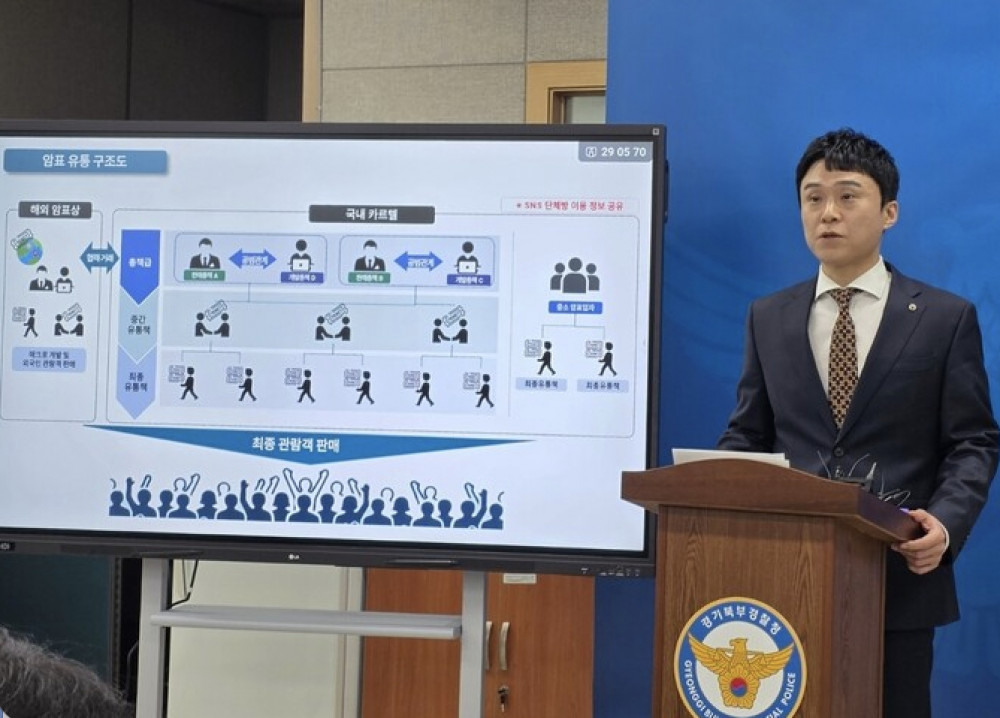
Investigations revealed that from October 2022 to January 2025, the suspects operated a social media group with 1,309 members to coordinate large-scale ticket scalping. They shared macro programs, ticket price trends, purchasing strategies, and police monitoring information, ultimately generating around 7.1 billion KRW (about 5.4 million USD) in illegal profits. Police confirmed that the suspects targeted over 190 concerts, selling more than 30,300 tickets.
The main ringleader, identified as A (28), established and managed the group, overseeing the operation. Co-conspirators B (31) and C (35) were responsible for developing the macro programs and managing ticket sales, respectively. Most of the leading suspects reportedly had prior experience in the IT industry.
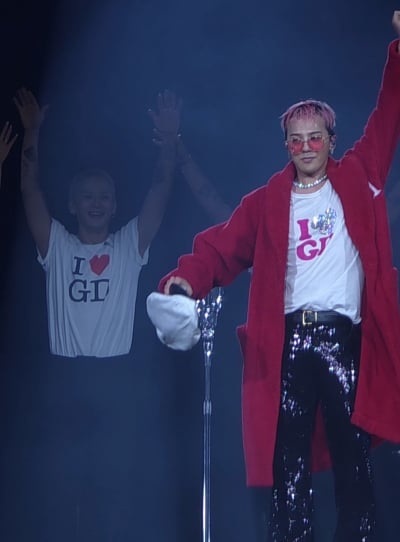
High-profile examples of scalping included tickets for G-Dragon’s World Tour at Goyang Sports Complex in March 2024, where a 220,000 KRW (about 170 USD) ticket was resold for up to 2.7 million KRW (about 2,080 USD). VIP tickets for BLACKPINK’s World Tour in Goyang in July 2025 reached 4 million KRW (about 3,080 USD), while Seventeen’s World Tour at Incheon Asiad Main Stadium in September of the same year saw VIP tickets sold for as much as 5 million KRW (about 3,850 USD). Other popular events, including IU fan meetings and Lim Young Woong concerts, were also involved in illicit ticket sales.
Police began intensively cracking down on macro-based ticket scalping in August 2024, first arresting lower-level sellers at concert venues and then targeting intermediaries and ringleaders in a coordinated sweep. The operation involved collaboration with the entertainment company HYBE for on-site monitoring and enforcement, as well as information sharing with major ticketing platforms. Authorities are also pursuing a developer who fled abroad through Interpol red notices and continue to investigate additional domestic and international scalping networks.
The suspects used programs that bypassed ticketing platform restrictions, including pre-selecting seats before sales opened and immediately moving to payment—a method known as “payment waiting” macros. They also employed “auto-repurchase” tactics for canceled tickets and circumvented account-based purchase limits to secure additional tickets.
Tickets obtained this way were sold to individual buyers via social media and ticketing platforms, or transferred to large overseas scalpers. For popular concerts, resale prices averaged three to four times the face value, with some tickets, originally priced at 200,000 KRW (about 155 USD), sold for as much as 5 million KRW (about 3,850 USD).
SEE ALSO: G-Dragon’s 'Good Day Season 2' confirms second half scheduling plan
 SHARE
SHARE