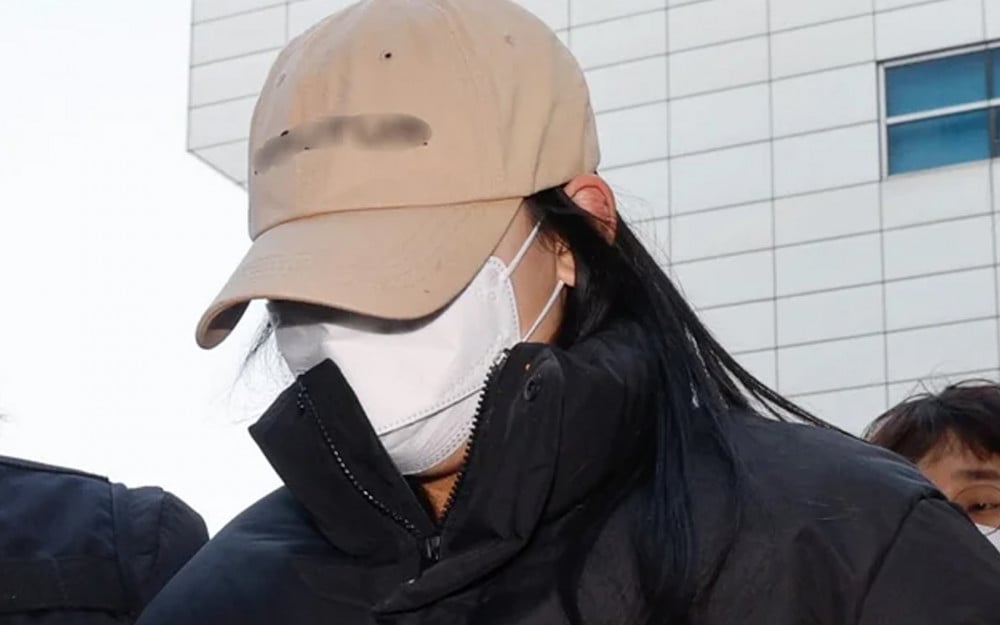
A wave of controversy has erupted after online users began glamorizing Kim, age 22, the suspect in the so-called “Gangbuk motel drug deaths” case, in which two men in their 20s were found dead. Experts say the reaction reflects hybristophilia - a psychological phenomenon in which individuals feel attraction toward criminals.
Ongoing “Criminal Admiration”
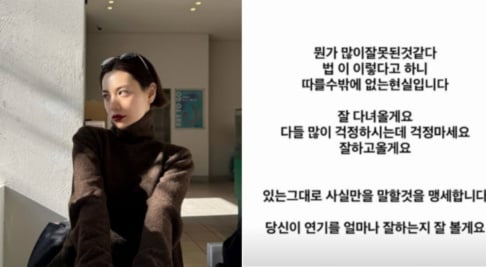
According to industry sources on February 23, posts praising Kim’s appearance have been spreading across online communities and social media platforms under titles such as “The motel serial killer’s Instagram is so sad.” The posts surfaced after personal photos, believed to be from Kim’s social media account, began circulating online.
One user referenced social media posts believed to belong to the female suspect in the case, saying, “She has a pretty face, dresses well, has many interests, and wants to date. She just seems like an ordinary woman her age.”
The user added, “There are hundreds of photos on her feed, and they’re all taken alone,” claiming, “If she had even one or two close friends she could open up to, I don’t think she would have become such a monster.”

Another commenter, User B, also mentioned the suspect, writing, “Based on the photos, it’s true that she’s pretty,” and adding, “She has a good figure. She looks about 170 centimeters tall and slim.” The commenter went on to say, “If a woman like this suggests going to a motel first, I doubt even one out of 100 men would refuse.”
Other users echoed similar sentiments in related posts, leaving comments such as, “Honestly, she’s pretty. I would’ve drunk the beverage right away too,” “I honestly don’t know what she did that was so wrong,” and “The court should take her appearance into account and acquit her,” offering unconditional support for the suspect.
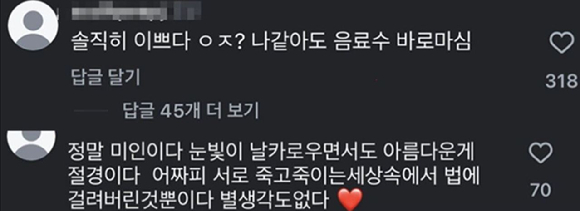
However, the majority of online users strongly criticized such reactions, responding with remarks like, “Are you really glamorizing and defending a serial killer?” “This is secondary harm that makes the bereaved families suffer twice,” and “Are you a psychopath?” Such reactions have also raised concerns about secondary harm to the victims’ bereaved families.
Meanwhile, the Seoul Gangbuk Police Station announced on the 19th that a woman in her 20s, identified by her surname Kim, had been referred to prosecutors under detention on charges including murder, causing injury with a dangerous method, and violations of the Narcotics Control Act.
Kim is accused of mixing benzodiazepine drugs into beverages and giving them to two men in their 20s at motels in Seoul’s Gangbuk District between January 28 and February 9, resulting in their deaths.
She is also suspected of injuring a man she was dating at the time by giving him a drug-laced drink in the parking lot of a café in Namyangju, Gyeonggi Province, at around 11:23 PM on December 14 last year.

Attraction to criminals based on their appearance is not new.
In the late 1990s, Shin Chang Won, dubbed one of Korea’s most notorious escapees, sparked what became known as the “Shin Chang Won syndrome.” After evading capture for 907 days following a prison break, he drew public fascination for his distinctive fashion sense and looks. Sentenced to life imprisonment in 1997 for robbery and murder, Shin became the subject of intense media attention during his fugitive period. A fan café was even created in his name, and the rainbow-colored shirt he wore at the time of his arrest reportedly sold out nationwide.
In 2022, controversy also surrounded Lee Eun Hae, the suspect in the so-called “valley murder case,” accused of drowning her husband to collect life insurance money. A fan club emerged in her defense, formed largely by individuals who expressed admiration for her appearance through an open KakaoTalk chat room.
Why Are Some Drawn to Violent Offenders?
In psychology, hybristophilia, sometimes translated as “criminal paraphilia” or “criminal admiration,” refers to a condition in which a person experiences sexual attraction toward someone who has committed crimes, leading them to sympathize with or follow the offender. The term combines the Greek words hybrizein (to commit an outrage) and philia (love). It is not an officially recognized psychiatric diagnosis.
Cases often involve perpetrators of violent crimes such as robbery, rape, serial murder, or mass shootings.
Experts suggest that multiple factors may contribute to the phenomenon: fantasies of redeeming the criminal, a desire for notoriety, a preference for a dominant partner, or the thrill associated with dangerous relationships.
The issue drew public attention when a female attorney appearing on the ENA and SBS Plus reality program 'I Am Solo' revealed that she fell in love with an incarcerated client and registered their marriage while he was still in prison, prompting speculation that her case reflected hybristophilia.
The phenomenon is also referred to as the “Bonnie and Clyde syndrome,” named after the infamous American criminal couple Bonnie Parker and Clyde Barrow. The duo rampaged across the U.S. Midwest in the 1930s, robbing banks and gas stations while committing multiple acts of violence. They killed 12 people, including police officers, and managed to evade the Federal Bureau of Investigation before being shot dead in a police ambush on a rural Louisiana road in 1934.
Paradoxically, Bonnie and Clyde gained widespread public fascination. During the Great Depression, as many young people felt pushed to the brink, their story was perceived by some as a rebellion against the established order, offering a form of vicarious satisfaction.
SEE ALSO: Korean conglomerates shift to English-first work culture as global expansion accelerates
 SHARE
SHARE