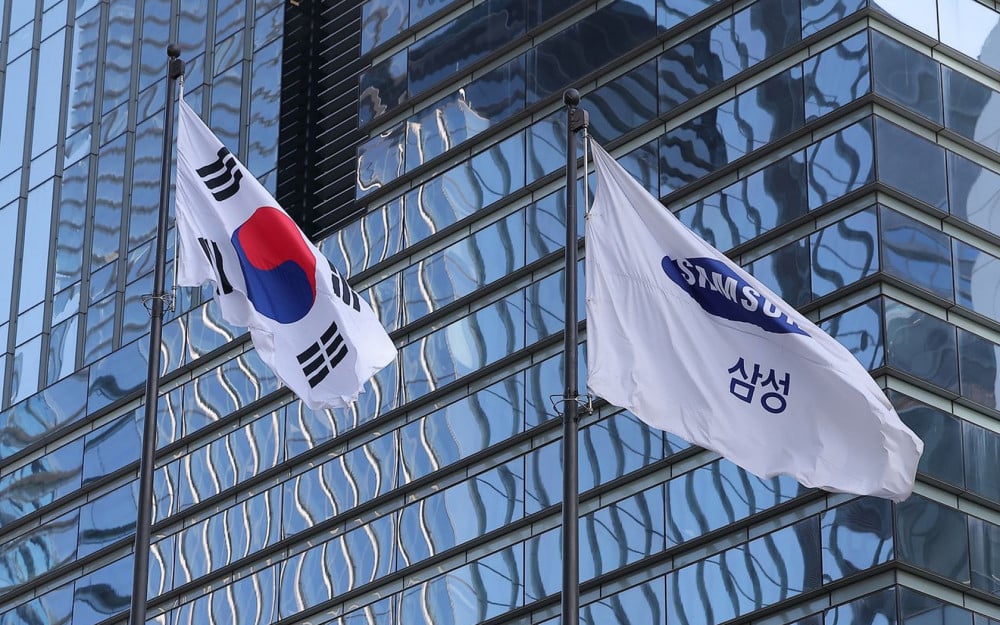
Major South Korean conglomerates are increasingly adopting English as their primary working language, signaling a broader shift toward global business standards as overseas operations expand and foreign employees become more integrated into corporate structures.
According to industry sources, companies including Samsung Electronics are moving to standardize internal and cross-border communication in English. Samsung Group recently finalized a policy to unify all documents exchanged between domestic and overseas affiliates in English. While the company had previously used both Korean and English, the change aims to eliminate inefficiencies caused by duplicate documentation and align with global norms.
Samsung had already introduced guidelines in 2023 requiring overseas subsidiaries to prepare internal documents and meeting materials in English. However, communication between domestic and international entities was still sometimes conducted in Korean, leading to repeated duplication of the same content in different languages. The new policy removes this redundancy by enforcing a single language standard. In some divisions—such as the foundry business under the Device Solutions unit and parts of its biotech affiliates—English has also become the default language for meetings.
Hyundai Motor Group has similarly established English as the default for official communication with overseas subsidiaries. While there is no formal written guideline, it has become standard practice to draft documents in English when working across borders. With many key overseas entities staffed by multinational teams, English communication is effectively a prerequisite.
This transition reflects a broader trend among companies evolving into global enterprises. As foreign hires increase and decision-making becomes more multinational, reliance on a Korea-centric language system is seen as limiting speed and efficiency. A unified language allows employees of different nationalities to access and share information simultaneously, improving collaboration. An industry insider noted that English is no longer just a tool for external communication but a foundational element of internal operations and organizational restructuring.
Some firms have formalized this shift. Hankook & Company Group, for instance, introduced official guidelines in March last year mandating the use of English in key meetings, communication between global offices, and internal shared documents.
The change is also reshaping corporate culture, particularly in meetings and workforce dynamics. Participation in discussions increasingly depends on the ability to communicate in English, especially for meetings involving global issues. As a result, language proficiency is beginning to influence access to information and decision-making processes.
In certain companies, English is already firmly established as the default language. Coupang, whose parent company Coupang Inc is listed in the United States, uses English as its official corporate language even within its Korean operations. Many senior executives, including those at the C-suite level, are foreign nationals, and both meetings and reports are conducted in English. Even Korean-language materials, including domestic media reports, must be translated into English before being shared internally.
Coupang has built an extensive in-house language infrastructure, employing around 200 professionals under the title “Bilingual Specialist” rather than traditional translators. Dedicated interpreters often accompany top executives even in informal meetings, providing nuanced translation that captures tone, gestures, and conversational subtleties. This robust system is cited as one reason why Coupang leadership consistently relies on personal interpreters, even in high-profile settings such as parliamentary hearings.
Industry observers expect the “English-first” workplace trend to spread further, particularly among companies with significant global exposure. Lee Jong Woo, a professor of business administration at Ajou University, noted that English proficiency could become a key factor determining organizational competitiveness and collaboration speed across industries.
The semiconductor sector, in particular, is accelerating this transition as part of a broader strategy to secure global leadership. Samsung Electronics and SK Hynix are both expanding the use of English in daily operations to strengthen communication with international clients and enhance responsiveness in a rapidly evolving market.
SK Hynix recently introduced guidelines within its AI infrastructure division encouraging employees to use both Korean and English in emails, adopt English names for teams, and gradually transition internal systems into English. Executives have also been advised to use English nicknames in meetings. Given the division’s close collaboration with global clients such as Nvidia, the move is aimed at creating a more seamless communication environment.
The company plans to expand this pilot program to other departments. SK Hynix has also publicly stated its intention to explore ways to integrate English more naturally into everyday work. This comes as the United States accounts for a growing share of its revenue, reaching approximately 66.9 trillion KRW (approx. 44.4 billion USD) out of a total of roughly 97 trillion KRW (approx. 64.3 billion USD) last year—an increase from 39–53% between 2020 and 2023.
Samsung Electronics is also accelerating its internal globalization efforts. In addition to enforcing English-only documentation across global entities, the company has expanded language integration across divisions. Some semiconductor units have already adopted English for both documentation and meetings to facilitate collaboration among a diverse workforce.
Samsung has further supported this transition through initiatives such as its STEP program, which allows domestic employees to work at overseas branches and vice versa. The company also covers the cost of language proficiency exams—up to twice a year—for seven languages, including English, Vietnamese, Russian, Spanish, and Chinese.
Industry experts emphasize that these changes go beyond talent development or employee benefits, framing them instead as a matter of survival. In sectors like AI, memory, and high-bandwidth memory (HBM), real-time collaboration with global clients and customized design capabilities are critical to product quality. The ability to communicate quickly and accurately is increasingly becoming a defining factor in technological competitiveness.
As global competition intensifies, South Korean companies appear to be redefining not just how they operate—but the very language in which they do business.
 SHARE
SHARE