With the growing influence of K-pop, many elements of its once niche subculture have entered the global spotlight. Concepts that were once only familiar to dedicated fans - from photo cards and fan chants to organized streaming campaigns - are now widely recognized by audiences around the world. Among them, few metrics carry as much weight within the industry as “first week sales,” known in Korean as” chodong.” More than just a measure of album purchases, first-week sales have evolved into a defining indicator of an artist’s popularity, fandom power, and market impact. Today, the race to break first-week records has become one of the most closely watched moments in every K-pop comeback.
The Landscape of K-pop’s ‘First Week’ Battle
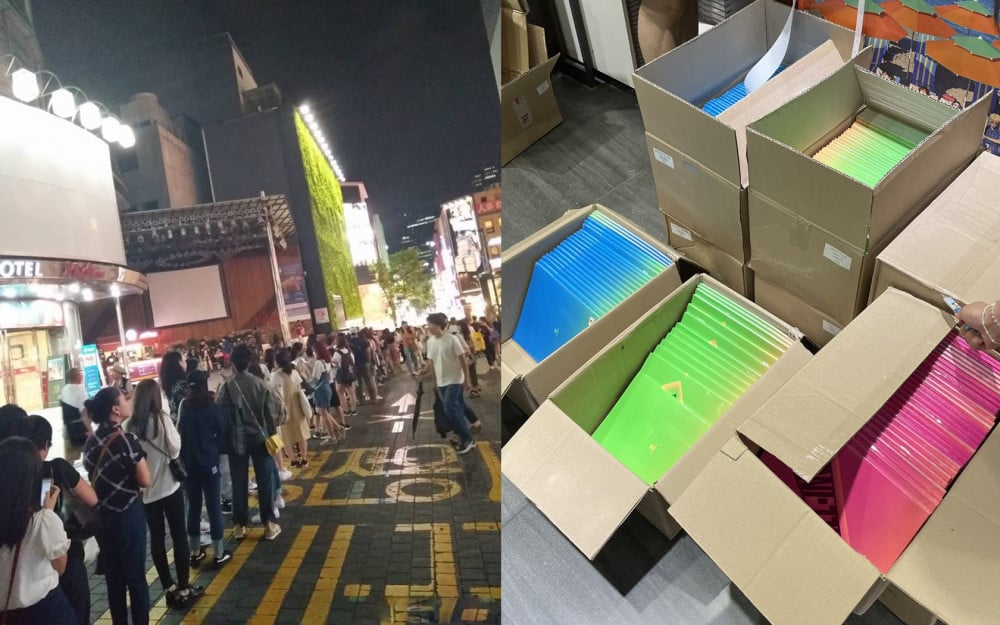
In a small record store tucked into an alley in Hongdae, unopened boxes are stacked high behind the glass doors before the shop opens. Some boxes still bear small dents from the shipping process. Next to the counter, scissors and box cutters are already laid out, and the staff checks the inventory once again. Sales have not yet begun, but anticipation and tension fill the air both inside and outside the store.
In the line outside, some people recognize each other, while others are meeting for the first time. Someone refreshes their phone screen repeatedly. Someone else checks a fan community forum. Though they are strangers, everyone is watching the same moment.
The day 'first week sales' begin.
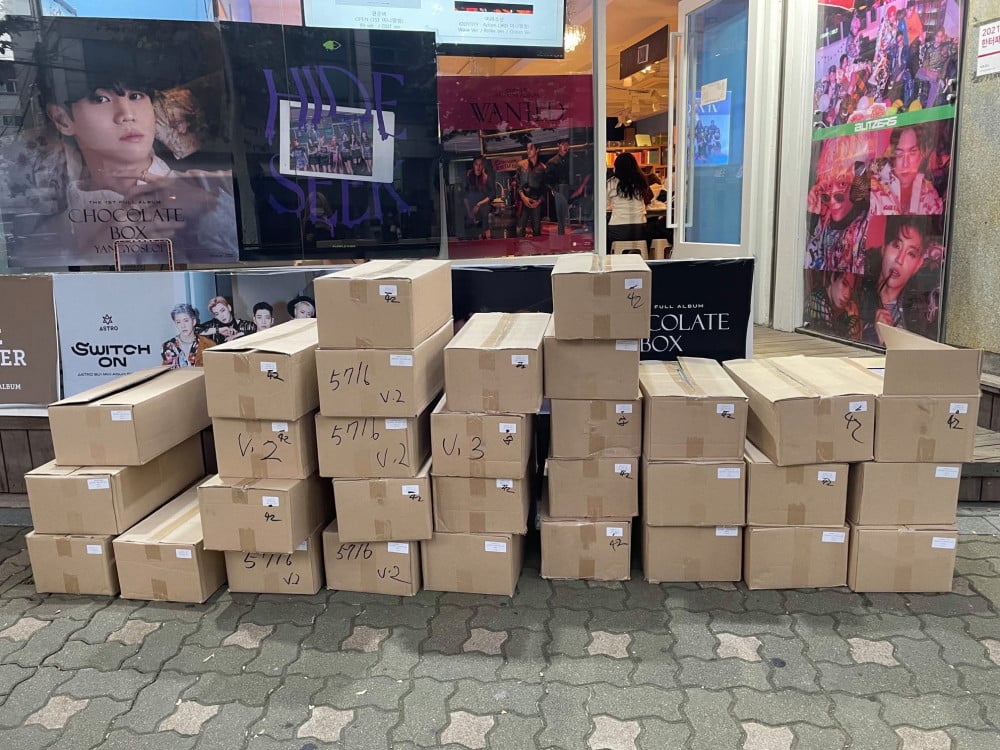
Even at a record store in Los Angeles, fans line up just five minutes before an album’s release time. These fans stare at their phone screens, displaying the words “First Week Sales.” For those who are new to the K-pop culture or unfamiliar with the whole phenomenon, these words make little sense.
Many would wonder, albums will continue to sell, why does the first week matter so much?
The first week after an album’s release is not simply seven days of sales. It is an unprecedented global moment when millions of fans around the world watch the same clock and create the same numbers together.
Real-time sales graphs move according to Korean Standard Time, with numbers updated every hour. Even though fans live in different time zones, the figures rise simultaneously. A fan in Los Angeles checks Seoul’s numbers and wonders: Where did this culture begin?
How Did ‘Chodong’ Become the Standard?
The term chodong was not always used in the K-Pop market. Literally meaning “initial movement,” it refers to the number of albums sold during the first seven days after release. In English, it is known as “first week sales.”
Until the early 2000s, the industry did not emphasize the first week as it does today. Album sales were simply tallied over time and later announced as results.
The shift began with changes in chart systems.
In Japan, the Oricon chart began highlighting “first week” performance as a symbolic indicator of success. In Korea, the introduction of real-time sales tracking further transformed the landscape. With the emergence of Hanteo Chart, sales numbers were no longer just records confirmed later - they became live data moving in real time.
Some might ask, “Why are first-week sales so important?”
The answer is simple. First week sales represent far more than album purchases. They are the most powerful single indicator of an artist’s fandom size, popularity, and current industry standing.
Major industry decisions, including global tour planning, often rely on these numbers.

Think of sports and entertainment. The success of a movie is often determined by its opening weekend box office. The Super Bowl’s viewership defines that night in sports history. In K-Pop, first-week album sales play the same role.
Once real-time tracking became visible, waiting began. And waiting led to action.
Fans began believing that purchases within the first week carried special meaning. Group orders were organized. Spreadsheets tracked participants and payments. Sales trends were shared through charts and graphs.
Buying an album became more than ownership - it became participation.
Within fandoms, first-week sales evolved from a result to a goal. Individual consumption expanded into a collective strategy.
This is no longer simple shopping.
It is an act of designing the future of an artist.
One album purchase can change chart rankings, create global headlines, and even add another city to a world tour schedule.
This sense of participation lies at the heart of the first week sales culture.
When First Week Sales Became Competition
Once first-week sales became cultural markers, they inevitably became benchmarks for comparison. And benchmarks naturally create competition.
In the fall of 2008, TVXQ released their fourth studio album ‘Mirotic.’ Within one week, it sold 110,000 copies. By today’s standards, the number might seem modest. But at the time, it was a remarkable achievement.
The year 2008 was the height of the MP3 player era. The iPod dominated music consumption, and digital downloads were rapidly expanding. CDs were widely considered a fading format, and the physical album market was shrinking.
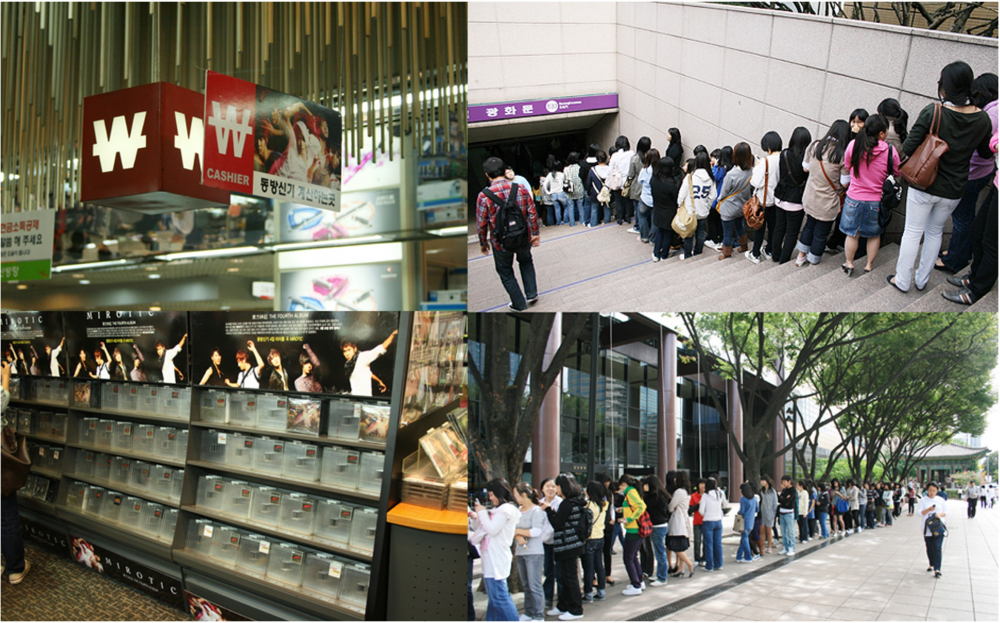
In that context, TVXQ’s 110,000 sales were like a flower blooming in the middle of winter. It proved that fandom power still mattered.
First week sales began to represent more than a statistic. They demonstrated fandom organization and synchronized action.
Before this, albums were typically purchased by the general public when the music was popular. After TVXQ’s success, a new formula emerged within the industry: First week sales = the size of a group’s core fandom.
For years afterward, the 100,000 first-week sales barrier remained unbroken.
Then, in 2013, a new powerhouse rookie from SM Entertainment appeared: EXO.
EXO’s first full album ‘XOXO’ and its repackaged version ‘Growl’ both surpassed 100,000 copies, eventually achieving cumulative sales of one million. The “million-seller era” had returned.
With every album release, EXO continued breaking records. Their fandom, EXO-L, built a systematic group purchasing structure. Some fans set target numbers. Others calculated progress percentages.
Album purchases were run like a coordinated project. And this became the prototype for modern K-Pop fandom purchasing systems. It was the moment when individual consumption evolved into collective strategy.

Many fan community practices seen today — mass streaming campaigns, purchase verification posts, and target goals — trace their roots to this period.
At the time, EXO stood at the absolute center of K-Pop.
Until BTS changed everything.
From 700 Copies to Millions
When BTS debuted the same year as EXO, their first album sold just 772 copies during its first week, according to Hanteo Chart.
Even without comparing them to EXO, the number was extremely small for the K-Pop market at the time.
But BTS gradually captured the hearts of global fans. They were idols who remembered fans’ names. Idols who expressed the anxiety and struggles of youth through their lyrics. Idols who communicated directly with fans through social media.
That was the entirety of early BTS — and it changed the world.
Their sales graph began to rise sharply.
- 2015: around 50,000 copies
- 2016: around 350,000 copies
Then in 2018, ‘Love Yourself 轉 Tear’ sold 1,003,141 copies in its first week.
Fans around the world cried together, celebrating the group’s unprecedented breakthrough in K-pop history. A group that began with 700 copies had become a million-seller. It was not just a number. It proved that artists from smaller agencies could succeed and that fandom power could overturn industry systems.
But that wasn’t the end. BTS later pushed the record even further.
In 2020, Map of the Soul: 7 sold 3,378,633 copies in its first week — the highest first week sales ever recorded for an idol group. From 700 copies to 3.37 million. A growth of nearly 4,800 times in seven years — a trajectory rarely seen in any industry.
During this period, a quiet tension developed between the fandoms of EXO and BTS. Records were instantly compared, and sales numbers were shared in real time. Although no official rivalry was declared, fans were always aware of each other’s numbers.
First week sales began to resemble sports competition. Who holds the record? Where will the next benchmark be?
This rivalry did more than pit fandoms against each other. It raised the scale of the entire K-Pop industry.
First week sales became pride, a declaration, and a measure of generational change.
The Era of 5 Million First Week Sales
One million first-week sales once felt like an insurmountable wall. But the wall did not last long. Records expanded rapidly: two million, three million. Then came another milestone.
In 2023, Seventeen’s 11th mini album ‘Seventeenth Heaven’ recorded 5,091,887 copies in its first week. The era of five million had begun.
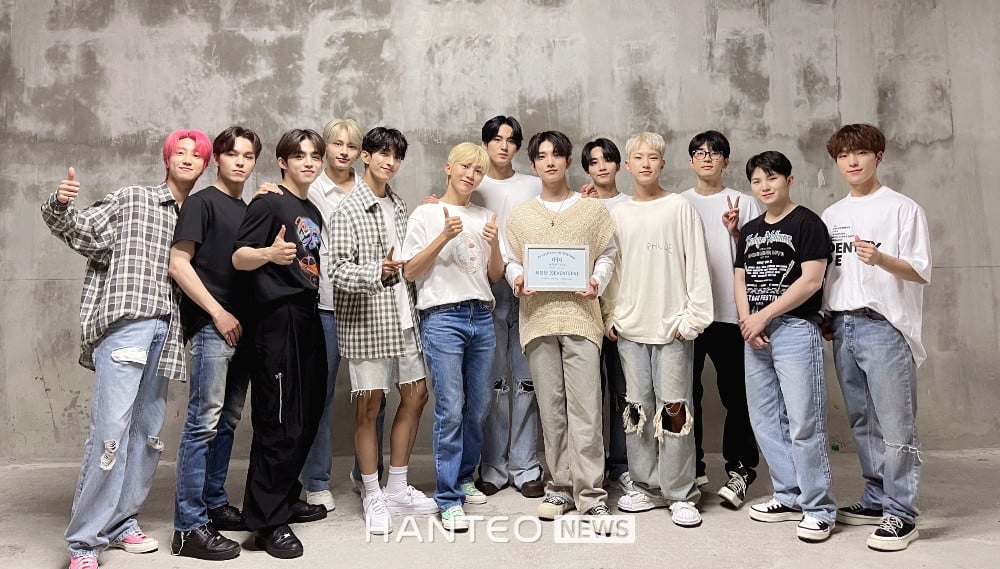
This figure, achieved by the thirteen-member group, became clear evidence of how dramatically the K-Pop market had expanded after BTS. That same year, Stray Kids joined the trend with 4.61 million first-week sales, proving that global fandom power extended far beyond a single group.
The surge was not limited to boy groups.
BLACKPINK achieved approximately 1.5 million first week sales with Born Pink in 2022, becoming the first girl group to reach the milestone. In 2023, aespa’s My World surpassed 1.69 million, setting a new standard for fourth-generation girl groups.
Soon after, NewJeans and IVE also joined the million-seller ranks.
A million first week sales was no longer an extraordinary achievement. For groups with large fandoms, it had become a baseline expectation.
At the same time, industry strategies evolved. Agencies designed preorder campaigns in advance. Multiple album versions and special inclusions became standard. Retailers highlighted chart eligibility, while platforms concentrated promotions during the first week.
The first week of release became the most critical window for both revenue and public attention.
First week sales were no longer just numbers.
They were a carefully designed system.
The Universe Inside One Album, The Connections formed through them
Yet every massive number begins with a single album.
When the store doors finally open, stacks of boxes are unsealed one by one. The sound of tape tearing echoes repeatedly as albums are arranged quickly across tables. The first week's sales numbers are not complete yet — but the process that creates them has already begun.
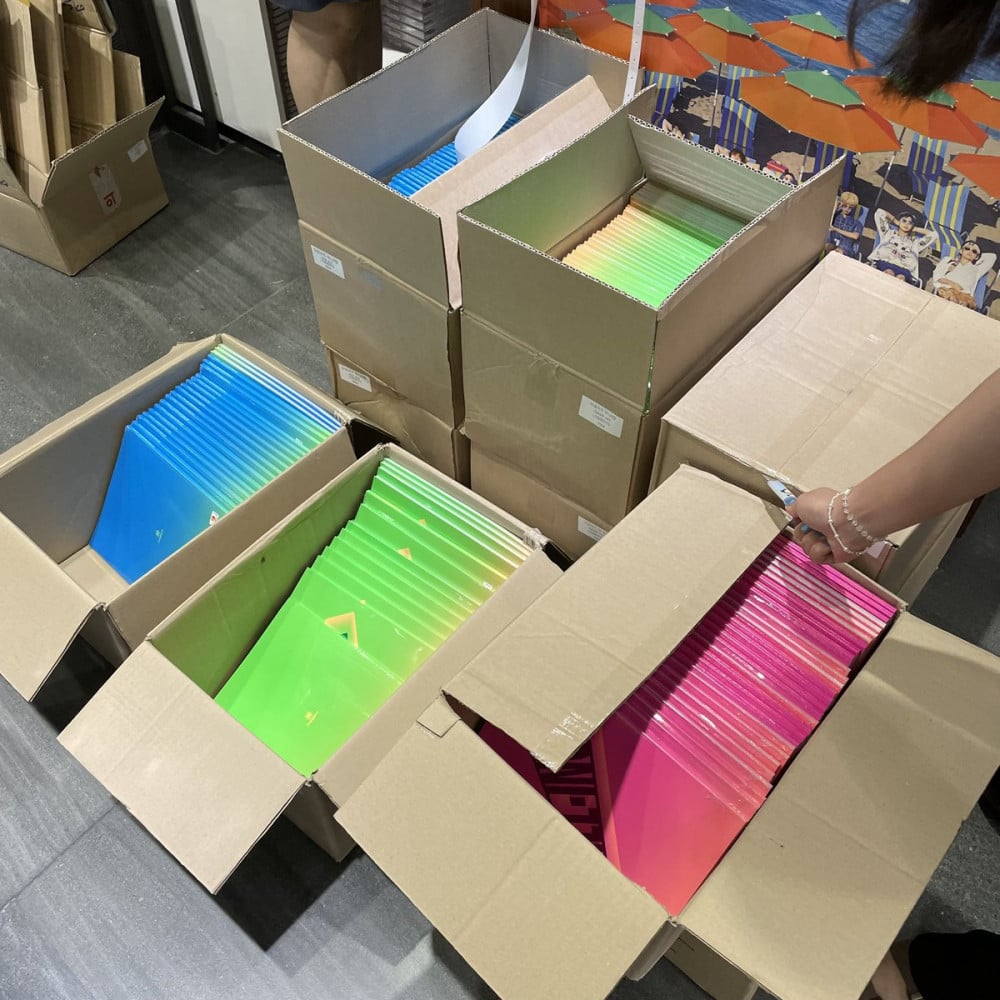
Fans tear open the plastic wrapping on the spot and check their photo cards. Each album contains one randomly selected member photo card. No one knows which card is inside until the album is opened.
That small uncertainty drives the excitement of the first week.
If a fan does not pull their desired member, they hesitate briefly before asking a simple question: “Would anyone like to trade this photo card?”
The question feels natural. Strangers become trading partners within seconds. A single piece of paper becomes a bridge between people. First week sales are not just statistics — they are connections formed between fans sharing the same moment.
A Festival That Moves the World
Today, the culture of first-week sales extends far beyond a single record store.
When an album is released, fans in Seoul, Los Angeles, New York, Tokyo, Bangkok, and Paris all experience the same seven days together. Time zones differ, but the sales numbers accumulate on the same graph.
Someone stays awake all night tracking updates. Someone checks sales trends on the subway during their morning commute. Someone translates community posts into other languages. English, Japanese, Thai, and French discussions spread across the internet as fans calculate progress toward shared goals.
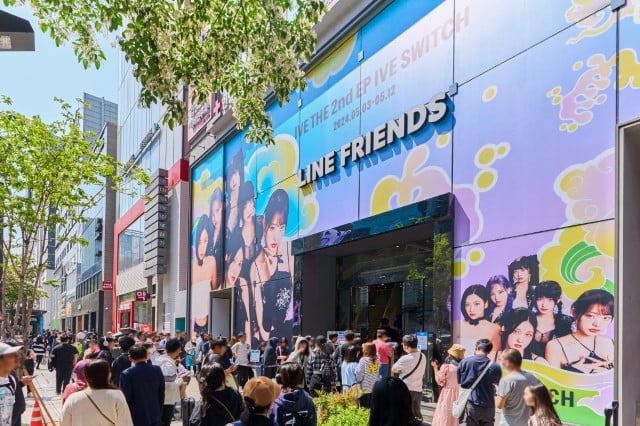
First week sales are no longer a domestic metric. They are a visible representation of synchronized global fandom action.The question is no longer simply how many albums were sold. The real question is how far the numbers can grow.
And it all begins the same way — with a hand reaching for one album, the sound of plastic wrapping being torn open, and a fan checking the photo card inside.
The numbers become records.
The charts become headlines.
The rankings become data.
But the excitement of waiting, the relief of reaching a goal, and the silence when a record falls just short — those moments are never captured in data.First week sales may be counted as numbers, but the memories belong to the people who lived through those seven days. When the week ends, the graph stops moving. But the shared experience continues until the next release.
And so the question remains: Why does the first week matter?
The answer is now clear.
First week sales are a record, an experience, and a moment in time — one that continues to unfold simultaneously across the world.
SEE ALSO: MBC’s ‘Show! Music Core’ to skip March 28 broadcast for '2026 KBO League Opening Game'
 SHARE
SHARE