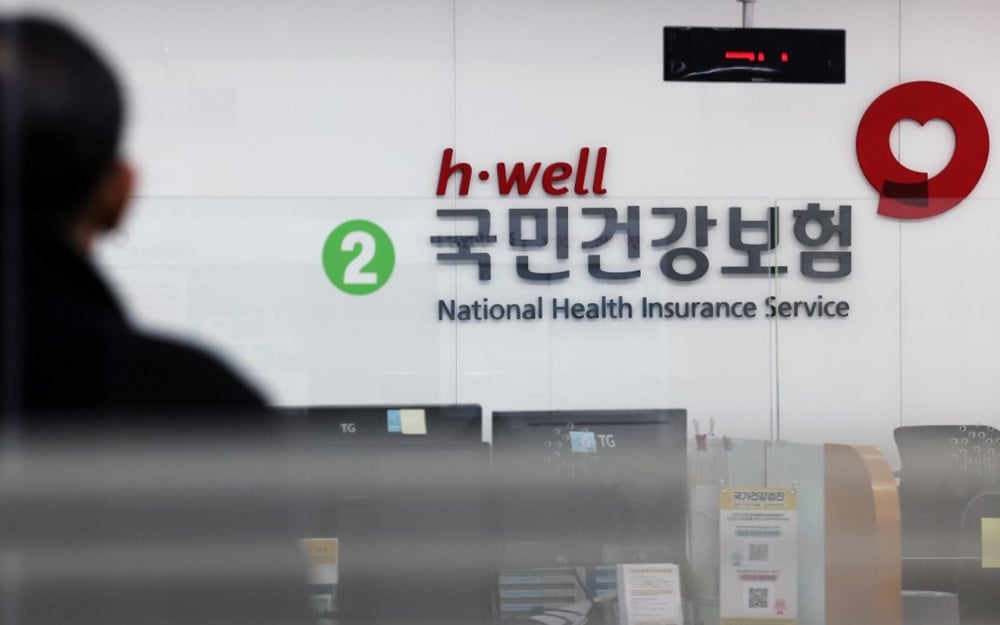
The National Health Insurance Service (NHIS), on December 30, simultaneously published the personal details of 13,449 high-amount, habitual delinquents in four major social insurance programs on its official website and in the Republic of Korea’s Electronic Official Gazette.
Those disclosed are individuals and entities who, as of December 31 last year, were more than one year past their payment deadline. The list includes those who owe at least 10 million KRW (approx. 6,950 USD) in health insurance premiums, 20 million KRW in National Pension contributions, or 50 million KRW (approx. 34,748 USD) in employment and industrial accident insurance premiums.
By category, health insurance delinquents accounted for the largest share at 10,444 individuals. This was followed by 2,424 National Pension delinquents and 581 employment and industrial accident insurance delinquents.
The disclosed information includes the delinquent party’s name, business name, age, industry or occupation, address, as well as the type and amount of unpaid premiums. For corporations, both the company name and the representative’s name are made public.
The number of people whose information was disclosed this year decreased by 1.7 percent from last year’s 13,688. The total amount in arrears stood at 364.1 billion KRW (approx. 253 million USD), down 35.4 percent from 563.9 billion KRW (approx. 391.9 million USD) a year earlier. NHIS explained that after stricter disclosure standards for employment and industrial accident insurance last year led to a temporary surge in high-amount disclosures, the number of newly emerging delinquents declined.
Among individuals, the largest amount owed was by a manufacturing worker identified as Seo, who has failed to pay 1.33078 billion KRW (approx. 924,827 USD) in health insurance premiums since October 2017. Among corporations, a company based in Seoul’s Gangnam District recorded the highest arrears, having failed to pay 12.01615 billion KRW in employment and industrial accident insurance premiums over a 16-month period.
The list also includes celebrities. Actress Shin Eun Kyung was found to have failed to pay 95.17 million KRW (approx. 66,139 USD) in health insurance premiums since February 2014. Broadcaster and comedian Lee Jin Ho, currently on hiatus amid allegations of illegal gambling, has been in arrears for 28.84 million KRW (approx. 20,042 USD) since April 2023. Singer Cho Duk Bae has also not paid more than 32.39 million KRW (approx. 22,509 USD) since February 2010.
NHIS held its first Deliberation Committee on Premium Information Disclosure on March 31, selecting 29,660 candidates for potential disclosure. These individuals and entities were given at least six months to submit explanations and were strongly urged to settle their premiums. The final list of disclosure targets was confirmed at a second committee meeting on December 18.
Those who paid their overdue premiums, had passed away, were benefit recipients, or had no income or assets, were excluded from the final list. For athletes who joined or left teams mid-season, arrears were calculated proportionally based on their actual period of affiliation.
Starting this year, to enhance the deterrent effect of disclosure, NHIS is publishing the information not only on its website but also in the Electronic Official Gazette. The disclosure system is intended to curb moral hazard among delinquents and encourage voluntary payment, thereby strengthening the financial stability of social insurance funds.
An NHIS official said, “If a disclosed delinquent pays their arrears and the amount falls below the disclosure threshold, their name is immediately removed from the list. We continuously manage and update the disclosed list.”
The official added, “We will repeatedly inform those already disclosed and those scheduled for future disclosure about the system in order to encourage voluntary payment of overdue premiums.”
Health insurance subscribers whose names are disclosed become subject to advance benefit restrictions. When visiting hospitals or clinics, they cannot use health insurance coverage and must pay the full cost of medical treatment out of pocket.
In the case of the National Pension, employers are the disclosure targets. If workplace premiums are unpaid, employees suffer disadvantages, as their pension contribution periods are not recognized. Accordingly, starting next year, the disclosure threshold for National Pension delinquents will be tightened from the current “two years overdue with 50 million KRW” to “one year overdue with 20 million KRW.”
NHIS stressed, “For those who have the ability to pay but deliberately fail to do so, we will implement strong collection measures such as advance benefit restrictions, asset seizure, and public auctions to ensure fairness with compliant contributors.”
SEE ALSO: 'Show Me The Money 12' crowns final winner after intense finale
 SHARE
SHARE