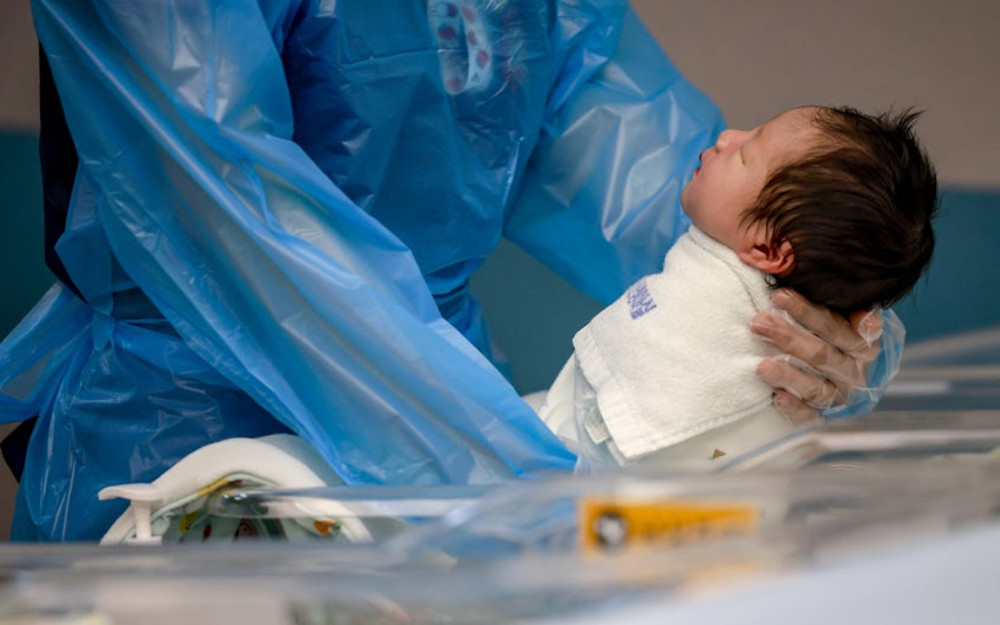
The sound of babies crying is returning, as the number of births in South Korea continues to rebound.
The total number of babies born from January to November last year surpassed 230,000, marking a 6.2 percent increase compared to the same period a year earlier. This represents the highest growth rate in 18 years.
According to the November 2025 Population Trends report released on January 28 by the National Data Office, the number of births in November last year reached 20,710, up by 627 births, or 3.1 percent, from November a year earlier.
Monthly, November’s birth count was the highest since November 2019, when 23,727 babies were born. The agency explained that birth numbers are gradually recovering to pre-COVID-19 levels.
Births have increased consecutively for 17 months since July last year. This trend is attributed to a combination of factors, including rising marriage rates, an increase in the population of women in their 30s, and a shift toward more positive perceptions of childbirth.
From January to November, the cumulative number of births totaled 233,708, up 13,647 births, or 6.2 percent, from the same period the previous year.
This marks the highest January–November total since 2021, when 243,383 babies were born, and the largest year-on-year growth rate for the period since 2007, when births rose by 10.4 percent, an 18-year high.
As a result, the annual number of births is expected to rise for a second consecutive year, following growth recorded in 2024.
The total fertility rate in November last year, defined as the average number of children a woman is expected to have in her lifetime, stood at 0.79, up 0.02 from a year earlier.
The annual total fertility rate is also increasingly likely to recover to the 0.8 range. The National Assembly Budget Office previously projected last year’s total fertility rate at 0.80.
SEE ALSO: Korean conglomerates shift to English-first work culture as global expansion accelerates
 SHARE
SHARE