A tragic emergency case involving an American pregnant woman in South Korea is drawing renewed attention to the country’s worsening healthcare access crisis, after she lost one of her twins while searching for a hospital during preterm labor.
According to fire authorities and officials in Daegu on April 7, the woman, a 26-year-old U.S. national who was 28 weeks pregnant with twins, began experiencing abdominal pain and signs of premature labor while staying at a hotel in Daegu on February 28.
Her husband, a U.S. service member stationed in South Korea, initially contacted local medical institutions. However, he was only advised to visit a higher-level hospital due to the absence of prior medical records. As her condition worsened, he eventually contacted U.S. Forces Korea, which led to an emergency call to 119 in the early hours of March 1.
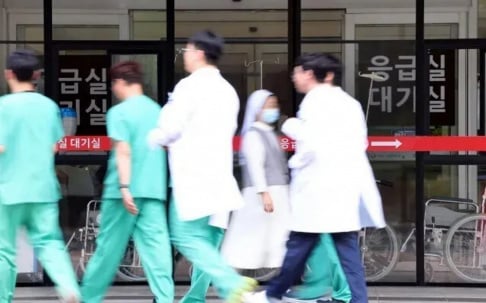
Although paramedics arrived promptly, immediate transport was not possible. Seven hospitals in the Daegu area successively declined to accept the patient, citing a lack of neonatal treatment facilities and available NICU beds. The woman was reportedly left waiting inside the ambulance for an extended period as responders searched for a hospital that could take her.
With no hospital agreeing to admit her, the couple was forced into a desperate, hours-long search across multiple regions. Her husband ultimately decided to drive, continuing to coordinate with 119 responders as they traveled through areas including Gumi in North Gyeongsang Province and parts of North Chungcheong Province.
During the journey, they made contact with emergency teams, but confusion over transfer coordination caused further delays. It was only after reconnecting with paramedics in North Chungcheong Province that she was finally transported to Bundang Seoul National University Hospital in Seongnam.
By the time she arrived—approximately four hours after the initial emergency call—her condition had critically deteriorated. Her water had broken, and her blood pressure had dropped significantly. She underwent emergency surgery, delivering the twins, but one baby died the following day. The surviving twin remains in critical condition with brain damage. The mother is not in a life-threatening condition.
The case highlights South Korea’s ongoing “ER shuffle” crisis, where emergency patients are repeatedly denied care due to capacity shortages. Government data shows that emergency room refusals nearly doubled from 58,520 cases in 2023 to over 110,000 in 2024, reflecting growing strain on the system.
Experts say the situation is particularly dire outside the Seoul metropolitan area. In Daegu, there are only 16 specialists and 32 beds dedicated to maternal and fetal intensive care. Even designated regional centers were reportedly at full capacity at the time of the incident.
High-risk pregnancies like this one—especially involving twins at 28 weeks—require immediate access to specialized teams and multiple NICU beds. Medical professionals warn that without a centralized system to coordinate hospital capacity in real time, critical delays can become unavoidable.
Civic groups and healthcare experts are now calling for urgent structural reforms, including expanding public healthcare infrastructure, increasing medical staffing, and implementing enforceable emergency response protocols. Local officials say they are in discussions with the Ministry of Health and Welfare to address long-term shortages. Still, concerns remain that similar incidents could happen again without immediate action.
SEE ALSO: Korean conglomerates shift to English-first work culture as global expansion accelerates
 SHARE
SHARE