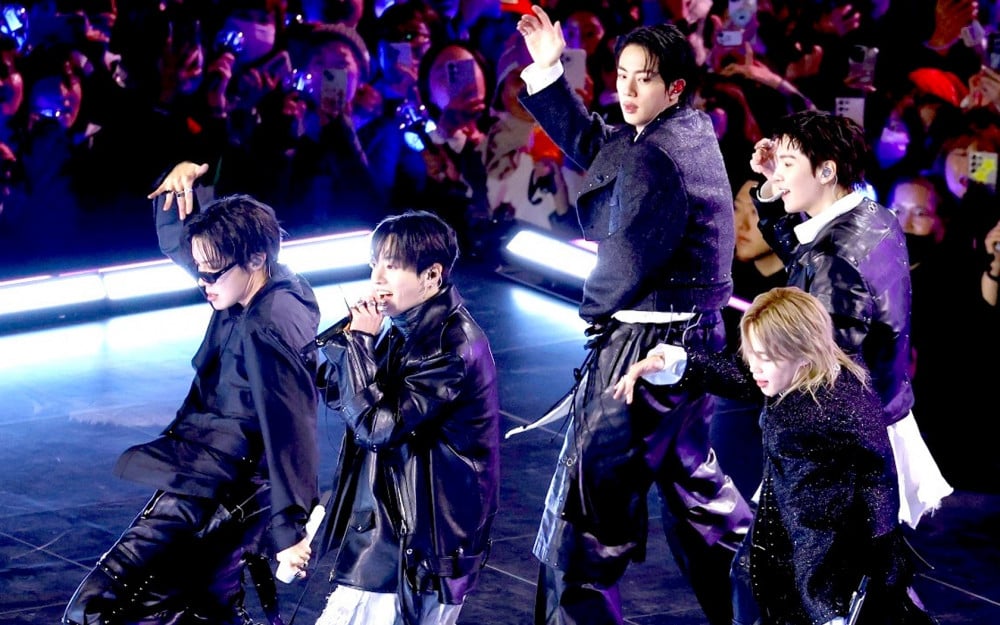
Card spending in the Gwanghwamun Station area of Seoul during the weekend of BTS’s comeback concert showed little overall change, but consumption by foreign visitors and people in their 20s and 30s surged significantly.
According to Hyundai Card and other sources, on March 30, total card transactions from the day before to the day after the concert amounted to approximately 321.1 million KRW (approx. 211,634 USD), marking a slight 0.53% decrease compared to the same period last year. The data analyzed transactions within a 500-meter radius of Gwanghwamun Station across restaurants, convenience stores, and drugstores from March 20 to 22.
Spending on the day of the concert itself actually declined. On March 21, card transactions totaled 66.2 million KRW (approx. 43,632 USD), down 37.5% year-over-year. In contrast, spending rose on the surrounding days—March 20 recorded 147.6 million KRW (approx. 97,326 USD), up 6.5%, while March 22 reached 107.4 million KRW (approx. 70,818 USD), a 37% increase.
By sector, results were mixed. Sales at drugstores and convenience stores jumped, while restaurants saw a decline. From March 20 to 22, drugstore transactions surged 107.6% to 8.6 million KRW, and convenience store spending rose 27.1% to 30.3 million KRW (approx 19,979 USD). Meanwhile, restaurant transactions fell 4.3% to 282.3 million KRW (approx. 186,060 USD).
Younger consumers led the increase in spending. Card transactions by people in their 20s rose 12.8% to 28.2 million KRW, while those in their 30s increased 3.1% to 99.7 million KRW (approx. 65,727 USD). Spending by individuals in their 40s also edged up 0.64% to 89.5 million KRW (approx. 59,002 USD).
In contrast, spending declined among older age groups. Transactions by people in their 50s dropped 7.2% to 68.1 million KRW, while those in their 60s fell 8.7% to 26.3 million KRW (approx. 17,338 USD). Spending by those aged 70 and older decreased 7.5% to 9.5 million KRW.
Foreign spending saw a notable spike. Over the three days, card transactions by foreign visitors rose 74.3% to approximately 6.6 million KRW. While spending on the concert day itself fell 30.2% to 1.2 million KRW, it surged on the surrounding days—reaching 3.8 million KRW (up 141.3%) the day before and 1.6 million KRW (up 198.7%) the day after.
Authorities attribute the drop in on-site spending on the day of the concert to extensive crowd control measures around Gwanghwamun Station. Safety protocols, including trains passing through the station without stopping, limited local consumption. However, there is growing speculation that the event could lead to increased spending by tourists and foreign visitors in the area going forward.
SEE ALSO: Illegal resale of BTS tickets sparks concern ahead of Goyang concerts
 SHARE
SHARE